


Automation / FICTORA FIELD NOTE
What is Marketing Automation? Complete FAQ
Explore how marketing automation simplifies tasks, enhances customer engagement, and drives revenue for businesses in the UAE's diverse market.
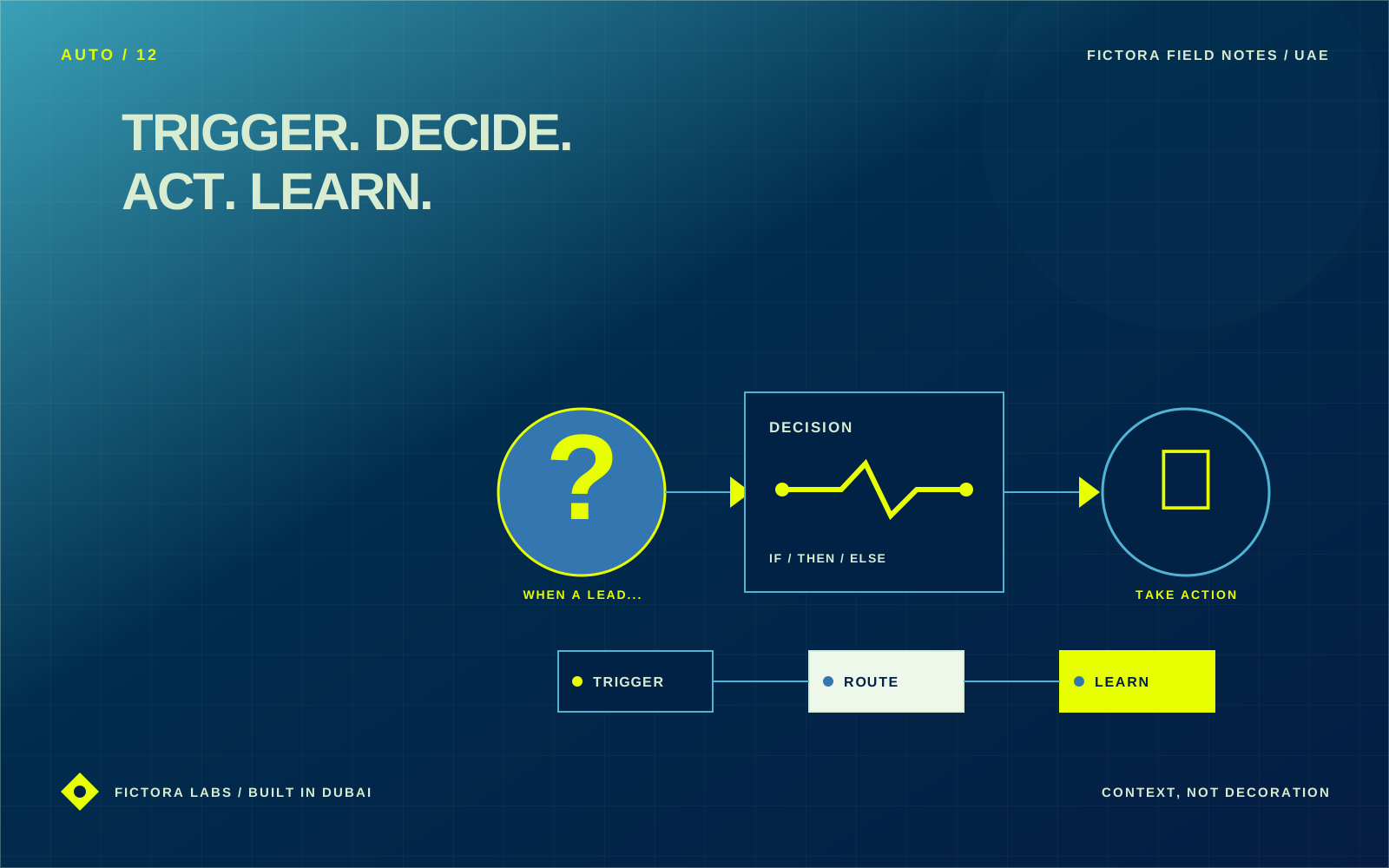
Marketing Automation
Benefits for UAE Businesses
Core Features of Marketing Automation Platforms
Main Functions of Marketing Automation
Email campaign automation handles sequences triggered by customer actions or preset schedules. For example, if a customer leaves items in their shopping cart, the system can send a series of follow-up emails with different messages to encourage them to complete the purchase.
For businesses ready to move from research to implementation, Fictora Labs provides marketing automation services in Dubai covering lifecycle design, CRM data, WhatsApp and email journeys, sales handoff, and attribution.
Lead scoring assigns scores to prospects based on their interactions and traits. For instance, actions like downloading a whitepaper or visiting a pricing page increase a lead’s score, allowing sales teams to focus on the most promising opportunities.
Analytics and reporting provide insights into campaign performance with metrics such as email open rates, click-through rates, and conversions. Meanwhile, CRM integration ensures a smooth exchange of data between marketing and sales, breaking down silos and fostering collaboration.
Workflow management tools enable businesses to design multi-step campaigns that span email, SMS, social media, and website personalisation. Many platforms include visual workflow builders, making it easy for non-technical users to create automation sequences.
On top of these functionalities, AI features bring deeper insights and more responsive automation to the table.
AI-Powered Features
Predictive analytics leverages machine learning to anticipate customer behaviour and spot trends. For businesses in the UAE, this can be particularly useful during periods like Ramadan or the Dubai Shopping Festival, helping optimise marketing efforts and inventory planning.
Optimal send-time scheduling ensures messages are delivered when customers are most likely to engage, taking into account regional time zones and cultural nuances.
Automated A/B testing runs continuous experiments on different messages and formats, automatically identifying what works best without requiring manual adjustments.
Natural language processing fine-tunes email subject lines, evaluates content, and monitors sentiment to ensure the tone aligns with the preferences of various customer segments.
Machine learning-powered lead scoring evolves with time, constantly improving its ability to identify high-potential leads by analysing patterns and adapting to changing market conditions, unlike static scoring methods.
Improving Efficiency
This becomes especially important during busy times like Eid or National Day, when maintaining consistent communication is vital despite the holidays. Automation allows businesses to focus on initiatives like market research, campaign fine-tuning, and building relationships with high-value clients. By shifting from reactive to proactive marketing, companies can stay ahead in the UAE’s fast-paced market.
With automation, tasks like consistent messaging, accurate customer segmentation, and timely follow-ups are handled seamlessly, ensuring professional standards across all customer interactions.
Better Customer Engagement
Automated platforms are great at analysing customer preferences and behaviours, allowing UAE businesses to tailor their messaging to specific market segments. For example, Arabic-speaking customers in Dubai can receive culturally and linguistically appropriate content, while English-speaking expatriates in Abu Dhabi get messaging suited to their preferences.
These systems also respond quickly to customer actions, ensuring interactions feel timely and relevant. Over time, this builds customer loyalty as businesses deliver consistent value through automated campaigns. From helpful tips to exclusive offers and personalised recommendations, automation helps customers feel understood and appreciated.
Increasing Revenue
Automated lead nurturing ensures a steady flow of communication with prospects, providing relevant information throughout their buying journey. This prevents leads from going cold and ensures sales teams receive well-qualified prospects ready to convert.
Automation platforms also provide valuable insights into which campaigns, messages, and channels deliver the best results. UAE businesses can use this data to allocate resources more effectively, focusing on proven strategies while experimenting with new ideas in a controlled manner.
Advantages
- Initial setup requires time and technical expertise
- Over-automation can feel impersonal if not managed well
- Relies on high-quality data to perform effectively
- May need ongoing adjustments and maintenance
- Integrating with existing systems can be challenging
- Success depends on clear processes and defined goals
The ability to scale is one of automation’s greatest strengths. As customer bases grow, businesses don’t need to expand their teams at the same rate. Automated systems manage the increased workload efficiently, maintaining high service standards while improving profit margins. This makes automation an essential tool for UAE businesses looking to grow smartly in a competitive market.
Marketing Automation Use Cases in the UAE
The UAE’s vibrant cultural mix and diverse population offer businesses a unique chance to use marketing automation to connect with their audiences in meaningful ways. By turning standard campaigns into personalised experiences, automation helps brands resonate more deeply with their customers.
The UAE calendar is packed with key events and holidays that businesses can leverage through automation. Events like Ramadan, Eid Al-Fitr, Eid Al-Adha, and UAE National Day are prime opportunities to engage customers and boost sales.
Similarly, for UAE National Day on 2 December, automation platforms can launch campaigns featuring patriotic themes, such as the UAE flag colours and national symbols. Retailers often see a spike in sales during this time, and automation can help send tailored offers to customers who’ve shown interest in previous national celebration campaigns.
Seasonal changes also present opportunities. During the cooler months (November to March), businesses like adventure tour operators can automatically reach out to customers interested in activities like desert safaris or mountain hiking. When temperatures dip below 30°C, automated triggers can promote outdoor dining or sporting events, ensuring timely and relevant outreach.
Multi-Language Communication
With a population that includes Emiratis, expatriates from over 200 nations, and both Arabic- and English-speaking communities, the UAE demands highly tailored, language-specific campaigns. Automation makes this possible by delivering the right message in the right language to the right audience.
For example, real estate companies can segment their audiences based on language preferences. Arabic-speaking prospects might receive emails featuring properties in traditional areas like Al Karama or Deira, with content emphasising family values and community ties. Meanwhile, English-speaking expatriates could get emails focusing on proximity to international schools, expat-friendly neighbourhoods, and modern amenities in areas like Dubai Marina or Downtown Dubai.
Automation also enables brands to create culturally appropriate workflows. A fashion retailer, for example, could promote modest wear collections to Arabic-speaking customers while showcasing international trends to English-speaking segments. This level of personalisation not only enhances customer engagement but also lays the groundwork for seamless integration with local payment and CRM systems.
Religious and cultural periods like Ramadan also benefit from language-specific campaigns. For Arabic-speaking audiences, automated messages might highlight themes of family, tradition, and community. In contrast, campaigns for English-speaking residents could focus on cultural appreciation, unique experiences, and inclusive celebrations. Even the timing of these messages can be fine-tuned – Arabic-speaking audiences may respond better to emails sent after Maghrib prayers during Ramadan, while expatriates might prefer weekend morning updates.
Getting marketing automation right in the UAE requires careful planning, thorough team preparation, and strict adherence to local regulations.
Before jumping into automation, it’s essential to take a step back and assess your current marketing setup. Start by mapping out the customer journey – from initial awareness to post-purchase. Look for areas where delays or repetitive tasks are slowing things down. For instance, identify how long each stage takes, where bottlenecks occur, and which tasks are eating up too much manual effort.
Check your technical readiness, too. This means reviewing your existing systems, ensuring your CRM data is accurate and complete, and confirming that your tools integrate seamlessly with local UAE payment gateways and other region-specific platforms. Don’t forget to evaluate your team’s digital skills to identify training needs.
When planning your budget, remember it’s not just about the cost of the platform. Factor in expenses for data migration, staff training, custom integrations, and ongoing support. These hidden costs can add up quickly, so it’s important to plan ahead.
Training Teams and Improving Processes
Training your team is a crucial step in making automation work. Start with the basics: introduce core automation concepts, show how to navigate the platform, and teach them how to create simple campaigns. To minimise disruptions, schedule these sessions during quieter business periods.
Hands-on practice is key. Use real-world scenarios, like creating welcome emails or designing win-back campaigns, to help your team see how automation fits into their day-to-day roles. This practical approach makes the training more relatable and effective.
Identify team members who can act as internal champions. These individuals can provide ongoing support and help bridge the gap between technical know-how and business goals. In the UAE’s relationship-driven work culture, having trusted colleagues lead the way can make a big difference.
To keep things running smoothly, establish a process for continuous improvement. Schedule regular reviews to analyse campaign performance, pinpoint areas for improvement, and share lessons learned. Encourage feedback from frontline staff – they’re often the first to spot issues or inefficiencies.
With trained teams and streamlined processes in place, the next step is ensuring compliance with UAE regulations.
Compliance with UAE data protection laws is non-negotiable. This includes handling data collection, storage, and processing in a way that not only meets legal standards but also builds customer trust – a vital factor in the UAE market. Your automation platform should include clear consent mechanisms for email subscriptions and data usage, and all communications should have easy unsubscribe options that respect customer preferences.
If your business operates across the GCC region, verify where your data is stored to ensure it aligns with local data residency rules. Understanding these requirements is essential to avoid compliance issues.
Cultural sensitivity is another critical factor. Automated messages should avoid being sent during prayer times or religious observances, and campaigns should be paused during significant periods like Ramadan. Ensure that messages are thoughtfully crafted in both Arabic and English, with a tone that respects local customs.
Finally, conduct regular compliance audits to stay ahead of evolving regulations. This proactive approach protects your business from fines and reputational damage, ensuring you remain a trusted player in the market.
The UAE’s marketing scene is changing fast, driven by the ambitious Vision 2071 . In this competitive environment, automation has become a must-have tool for businesses aiming to stay ahead. Emerging trends are shaping a new chapter for automated marketing in the region.
AI-powered automation is redefining how businesses in the UAE engage with their customers. By enabling real-time, adaptive interactions, AI is helping brands meet the high expectations of UAE consumers. In a market where personalised experiences across multiple platforms are the norm, this technology ensures businesses can keep up.
Another key development is the improvement of local payment integration. For e-commerce and service providers, smooth transaction processes are vital for converting leads into paying customers. Enhanced payment solutions will make these transactions faster and more seamless, boosting customer satisfaction.
For companies exploring automation, the real question is no longer if they should adopt these technologies but how quickly they can implement them effectively. Fictora Labs is leading the charge, helping UAE businesses combine AI-driven automation with smart, locally tailored marketing strategies. Their solutions empower brands to build stronger customer relationships while scaling their efforts efficiently.